Mantel design ideas that look styled and not staged
Discover mantel design ideas that look perfectly styled and not staged. Learn how to layer art, build height, and balance your mantel decor with simple steps.
- Styled by Louisa Kimbrough
- 9 minute look
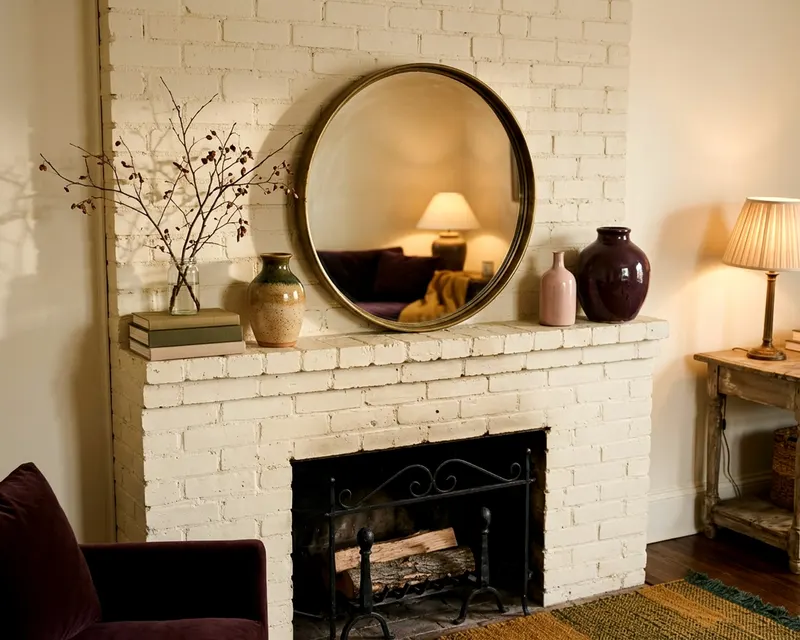
A well-designed mantel relies on a few overlapping layers rather than a straight row of small items. You build the arrangement around a single large anchor piece. Tall objects add height on the ends to draw the eye up.
Low items soften the front edge. This layered approach creates mantel design ideas that look finished and intentional.
Start with one large anchor piece
The anchor sets the tone for the entire fireplace, giving your mantel a solid visual structure. You need a focal point to ground the display. A large mirror or a substantial piece of art works best for this job.
Small frames get lost against a wide chimney breast, making the wall look bare. The anchor gives smaller mantel decor something solid to sit against.
Round mirrors break up the rigid right angles of the firebox and the mantelpiece. The curves soften the architecture of the room. A mirror can reflect light into the space, which may help a dark living room feel brighter.
A large canvas brings rich color and thick texture directly to the wall. You can hang the piece or lean it casually against the drywall. Leaning an object feels more relaxed, but make sure it is stable and use hardware rated for its weight if you hang it. Hanging it frees up surface area for more objects on the wooden shelf.
Place the anchor right in the middle of the mantel. The center position gives you a clear starting point for the rest of the design. Everything else you add will frame this main object.
The piece should fill most of the space between the mantel and the ceiling. A tiny mirror floating on a large wall looks like a mistake.
Scale matters most in this first step. Go bigger than you think you need. A heavy frame adds visual weight to the display. Wood frames add warmth to plain painted drywall, and brass frames catch the light from overhead fixtures.
Lean a dark oil painting against the wall to create a moody atmosphere in the room. Try an unframed canvas for a raw, unfinished edge. The thick texture of the oil paint stands out against smooth interior walls.
Hang a mirror opposite a window so the glass bounces sunlight across the living room. Keep the anchor relatively simple. A quiet background allows you to add interesting shapes in front of it later.
Build height with a pair of taller items
The ends of the mantel need height to frame the anchor and draw the eye upward. Tall objects bridge the visual gap between the mantel ledge and the top of the artwork. A pair of tall candlesticks does this job well.
You can also use long branches placed in a heavy vase, which adds a natural element to the display. This transition makes the arrangement look cohesive rather than flat.
Place these tall items near the outer edges of the shelf. The outward placement gives the arrangement a clear border. Symmetrical arrangements place identical items on each end of the ledge. Matching wall sconces give symmetry alongside your anchor.
Adding wall sconces gives you built-in height and casts warm light across the wall. Asymmetrical designs place a tall vase on one side and a candlestick on the other. Asymmetry feels more collected over time.
The visual weight should match even if the specific items differ. A thick wooden vase balances against a slender brass lamp.
Taper candles add vertical lines to the arrangement. Thin candles do not block the art or mirror behind them, but keep any lit candle clear of garlands and dried stems and never leave it unattended. Pick candle colors that pull tones directly from the room.
Burgundy candles warm up a cool gray wall. Olive green candles look natural against dark wood paneling. The smooth wax adds a soft texture next to hard metal holders.
Vases offer a chance to bring different materials onto the shelf. Matte ceramic vessels absorb light and look soft. Glass vases feel light and airy, keeping the mantel from looking crowded.
Fill the vase with tall, structural stems. Cut branches from the yard give the display a wild and organic shape.
Dried grasses add soft, feathery texture to the vignette, though dry stems burn easily so keep them away from candles and a lit fireplace. Keep the stems sparse. Too many thick branches will block the anchor piece.
The stems should reach higher than the middle of the mirror or art. This variation in height keeps the eye moving around the display constantly.
Layer in something low, soft and natural
The flat wooden ledge needs softening. Hard lines and sharp corners often look stiff in a relaxing room. Low objects break up the straight edge of the mantel.
Trailing plants spill over the front edge of the shelf. A draped garland softens the hard transition from the shelf down to the firebox. Soft shapes make the mantel feel lived-in and comfortable.
Garlands work well throughout the whole year. Use eucalyptus leaves for a dusty green color that fades nicely. Pine greenery suits the winter months. Let the leaves drape loosely over the sides rather than pulling them tight, and keep greenery away from a fire or lit candles.
The uneven drape breaks up the strict horizontal line of the wood. You can weave a thin garland between your candlesticks and vases. The leaves tie the separate objects together into one scene.
Potted plants offer another way to add organic life. Pothos vines grow quickly and trail downward over the bricks, so check that a plant is safe for pets first. Small ferns add dense, feathery texture to the arrangement. Terracotta pots bring earthy warmth to a stark white mantel.
Use a low bowl to hold small decorative objects. A shallow wooden bowl catches stray matches or keys. A heavy marble dish adds weight to the center of the shelf.
Low objects should sit directly in front of the taller items. The overlap creates necessary depth. A flat, single-file arrangement looks like a store shelf.
Natural materials provide the best contrast to plain drywall and brick. Smooth river stones add a quiet, organic element. Woven baskets bring rustic texture to a smooth painted shelf. The soft texture contrasts sharply with the hard surfaces of the fireplace.
Smooth ceramics stand out clearly against rough masonry on a brick fireplace. Rough clay pots ground a glossy marble surround and bring it down to earth. Contrast makes each item stand out clearly.
Keep the sides loosely balanced
Visual weight determines how a mantel actually feels in the room. Symmetrical layouts use exactly matching objects on both ends. This approach feels formal, traditional and orderly.
Traditional spaces suit exact symmetry. Most casual rooms feel better with loose balance, which uses different objects that share the same visual weight.
A heavy bronze statue balances a large glass vase. The glass is physically larger, but the bronze is much denser. The eye reads them as equal weights on the shelf. Group smaller items together to equal one large item on the opposite side.
A cluster of small candle holders balances a thick pillar candle. The grouping acts as a single visual unit. Odd groupings look more natural than even pairs. Small clusters force the eye to move around the group.
Mix materials to keep the arrangement interesting. Too much glass makes a space look cold and empty. Too much metal feels harsh and industrial.
Combine brass, wood and ceramic together on the same shelf. The varied mix reflects light differently across the surface.
A shiny brass bell sits well next to a matte clay pot. The stark contrast highlights the finish of each piece. Spread the materials evenly across the length of the mantel.
Do not put all the shiny metal on one side. The even distribution ties the ends together nicely.
Stand back from the fireplace often as you work. Notice where your eye goes first, because the distance shows you where the heavy spots are. Move an item if one side feels too heavy.
Slide a vase closer to the center to reduce its visual impact. Move it outward to increase its visual weight. The simple placement adjusts the balance immediately.
Overlapping objects also shift the weight. Place a small frame slightly in front of the large anchor. The frame connects the foreground to the background.
Arranging picture frames in overlapping layers works well on a deep mantel.
Leave breathing room along the ledge
Empty space gives your objects room to shine. A crowded mantel looks messy and chaotic. You need negative space to highlight your favorite pieces properly.
Breathing room makes the display look deliberate and intentional. Clutter happens when every inch of the shelf is full.
Leave clear gaps between your object groupings. The wall behind the objects should remain visible in a few places. The empty gaps frame the objects sitting next to them. The anchor piece needs space around its outer edges.
Do not block the entire bottom half of your mirror. Let the glass show through the arrangement. The reflection adds depth and light to the room. If you cover the mirror entirely, you lose the extra light.
Edit your objects ruthlessly before you finish. Take everything off the mantel before you start styling. Put the anchor back first.
Add the tall side objects next. Step back and look at the whole space. Add the low objects carefully. Stop before the shelf feels full.
Scandinavian interior design feels calm because the surfaces stay relatively clear. A few well-chosen objects make a stronger statement than a crowded shelf of small trinkets.
Consider the depth of your mantel shelf. Shallow ledges require careful planning. Thick objects will hang over the edge and look precarious.
Stick to flat items on narrow ledges to avoid accidents. Thin books and small frames work well.
Deep mantels give you much more freedom to play. You can stagger items from the front to the back. The extra depth allows for more dramatic layering.
Even on a deep shelf, leave empty pockets of air. The empty space defines the distinct groups. It turns a collection of random things into a cohesive design.
Swap one or two things as seasons change
A well-structured mantel is easy to update, and you do not need to start over every season. Keep the anchor piece exactly where it is. Leave the tall side items in place.
Swap out the smaller accessories to reflect the weather outside. The foundation stays strong while the seasonal details change around it.
Change the branches in your vases as the weather turns. Spring calls for fresh flowering branches. Cherry blossoms add a soft pink color to the room.
Summer favors bright green leaves or tall dried grasses. Fall brings bare branches and rich autumn foliage. Winter suits dark pine boughs and red berries if they are safe for kids and pets.
The stems set the seasonal mood, and the swap takes only a few minutes.
Update your candles as the natural light changes outside. Pale tapers look fresh and crisp in spring sunlight. Dark wax adds cozy warmth to long winter evenings. Swap out a bright ceramic bowl for a dark wooden box.
The heavier textures match the cozy feeling of colder months. Rotate small art pieces on the ledge. A bright watercolor suits the summer heat. A moody charcoal sketch fits the darker days of autumn.
Keep your seasonal decor subtle. The mantel should still look like part of your living room. Avoid themed items that clash with your daily style. A bowl of pinecones feels wintry without looking like a loud holiday display.
Fresh branches from your yard bring the outdoors inside without overwhelming the shelf.
Store the swapped-out pieces together so the next change is quick.

