Mid-century modern interior design, room by room
Bring mid-century modern interior design into your home with practical tips on choosing the right furniture lines, wood tones and period correct accent colors.
- Styled by Kellan Langley
- 7 minute look
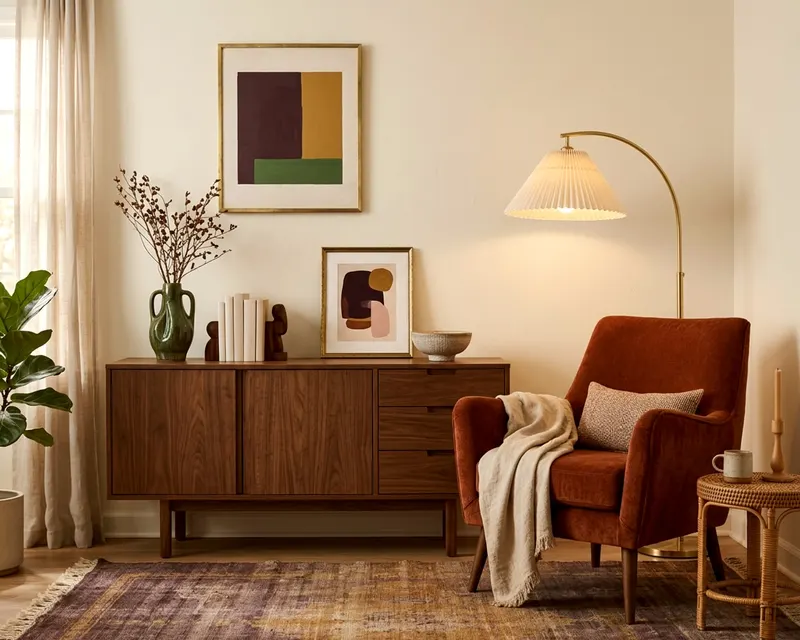
Mid-century modern interior design relies on clean lines, warm woods and functional forms. You build the look by keeping rooms airy and letting a few strong shapes stand out. The style skips heavy ornamentation in favor of tapered legs and organic curves.
How mid-century modern differs from general modern design
The architecture of the house often drives your interior choices. Many mid-century homes have large windows that open up the entire floor plan. You want to honor that openness inside.
Contemporary modern design can feel cold, with stark white walls and sharp angles. Mid-century modern interior design feels much warmer. The difference comes down to the materials.
A purely modern room might rely on glass, polished steel and poured concrete. A mid-century space pairs a warm walnut dining table with an earthy green rug. Nature comes indoors.
You soften the strict geometry of the walls with organic shapes. The coffee table might take the shape of a kidney bean or a smooth teardrop. You can tell a room leans mid-century when it feels highly organized but still inviting.
Furniture shapes for the living room and dining room
The legs define the furniture of this era. You will notice that many sofas and sideboards of the style sit on tapered wooden pegs. They lift heavy pieces off the rug. This open space creates a distinct feeling of lightness, letting you see the floor.
These rooms feel spacious because the furniture profile stays low, with sofa backs that sit low. The dining room credenza stretches long and low across the wall, keeping your sightlines completely clear. You can look from the kitchen straight through to the backyard.
Organic curves play against these straight horizontal lines. The accent chair might feature sweeping bentwood arms that cradle the body. The dining table uses rounded corners instead of sharp points. These gentle shapes prevent the living room from feeling like a rigid wooden box.
Look for this balance. You want a low, straight frame softened by gentle curves. Heavy carvings and thick, blocky feet ruin the effect. The furniture should look light enough to pick up and move across the room.
Mid-century modern bedroom furniture lines
The bedroom follows the same rules of lightness and practical function. The bed anchors the space without dominating the room. You want a simple platform bed rather than a towering frame. The mattress sits low.
Bedroom storage pieces feature clever, minimal detailing to keep the eye moving. A classic dresser from the period often avoids protruding metal hardware. The drawers feature integrated wooden pulls or sleek cutouts for your hands, which keeps the front completely flat.
The nightstands mirror the low profile of the bed. They often feature just a single drawer perched on long, angled legs. This minimalist approach keeps the bedroom feeling calm. You want your eye to rest on the beautiful wood grain rather than busy knobs.
Warm wood tones and ways to mix them
The wood brings essential warmth to the style. Walnut and teak are common in mid-century rooms, bringing a rich, medium tone and a tight grain. Rosewood offers a darker option. You want the wood to take center stage in every room.
But too much wood can easily feel heavy and dark. You need to balance those warm brown tones with solid colors and soft fabrics. The rug provides a great visual break between a wood floor and a wooden table. A thick wool rug in a solid cream grounds a heavy dining set perfectly.
Your woods do not need to match. You can mix teak and walnut in the same room. The trick is keeping the undertones similar.
Both lean warm and slightly orange. It helps to know which wood finish is on your furniture before bringing in a new piece. A dark mahogany dresser might clash with a light ash bed frame. Stick to the middle tones.
You keep the finishes matte or satin. High gloss lacquer belongs to other design eras. The wood should look natural and lightly oiled.
Accent colors like mustard, teal and burnt orange
The walls usually stay quiet. You paint them warm white or a soft, pale gray to let the furniture shapes stand out. The real color comes from fabrics, canvas art and small decorative accents.
The mid-century palette borrows heavily from nature. You will see earthy greens, deep teals, burnt orange and mustard yellow. These colors look beautiful against dark wood, feeling grounded and muddy rather than neon bright. The throw pillow on a gray sofa might be solid mustard, while the bedroom drapes feature a strong geometric pattern in olive and teal.
Keep the color application deliberate and controlled. You do not want a rainbow scattered everywhere. Pick a couple of strong accent colors for each room. A burnt orange lounge chair makes a bold statement in the corner.
You can echo that orange in a single piece of pottery on the bookshelf. If you want a cohesive home, you can build one color palette for your whole house using these earthy tones. The colors should draw the eye without overwhelming the natural wood.
Window treatments and rugs for mid-century rooms
The floor and the windows need dressing. Heavy, ornate drapes ruin the clean lines of a mid-century room. You want window treatments that pull back completely, making simple pinch pleat drapes in a solid color work perfectly. You hang them high and wide so the fabric clears the glass when open, maximizing the natural light pouring into the room.
The rug serves as a foundation for the furniture. A plain wool rug in a light neutral color is always a safe choice. It highlights the dark wood legs sitting on top of it.
If you want more visual interest, you look for geometric patterns. A rug featuring large asymmetrical shapes or sharp triangles fits the era. You avoid traditional Persian rugs or heavily distressed vintage patterns to keep the textures clean. A thick shag rug adds great texture to a living room, contrasting with the smooth wood floors.
Lighting design that doubles as sculpture
The lighting acts as functional sculpture. A beautiful mid-century fixture looks striking even when turned off during the day. The Sputnik chandelier remains a classic choice for a dining room. Brass arms explode outward from a center sphere.
The arc lamp solves lighting problems in the living room. It sweeps up from a heavy marble base and hangs directly over the sofa. This provides overhead light without wiring a new ceiling fixture.
The table lamp often features a brightly colored ceramic base shaped like a gourd. You top it with a tall, straight drum shade. You can plan a lighting layout with three layers of light to give the room depth. A brass floor lamp, a ceramic table lamp and an overhead globe pendant work beautifully together.
Geometric accessories and wall decor
Accessories stay large and purposeful. The style favors bold, graphic shapes over fussy collections of small items. The wall mirror often takes a sunburst shape in brass or carved wood. This adds a sharp, radiating texture to a flat wall.
The art leans abstract and geometric. You hang one large canvas rather than clustering many tiny frames together. The empty space on the wall matters just as much as the art itself. You let the architecture and the furniture breathe.
The shelves should hold a few choice pieces of pottery and glass. You leave plenty of breathing room between the objects. A vintage brass clock or a heavy glass ashtray adds the right touch of period detail. You keep surfaces mostly clear, letting the shape of the table or the credenza remain the focus.
Mixing vintage and modern pieces naturally
The room should feel like a real home. It should never look like a museum display. A space filled exclusively with mid-century modern decor feels stiff. You need to mix eras to give the room life.
The sofa offers a great place to go completely modern. A contemporary sofa with clean lines blends right into the aesthetic. It usually offers much better comfort than a rigid vintage frame. You can surround that modern sofa with a vintage teak coffee table and an authentic bentwood chair.
The rug can also break up the strict time capsule effect. A modern geometric rug or a simple textured flatweave grounds the space. Smaller details help bridge the gap between old and new. You can place a brand new hardcover book next to a vintage brass bowl.
Take your time gathering pieces for each room. A genuine home is collected slowly over many years. You might start with a great vintage credenza for the television, then find a new lounge chair that mimics the old style.