Choosing curtains for a living room that hang right
Find the right curtains for living room windows with a practical guide to fabric, fullness, length and rod placement so they hang right in your room.
- Styled by Lenora Kittredge
- 7 minute look
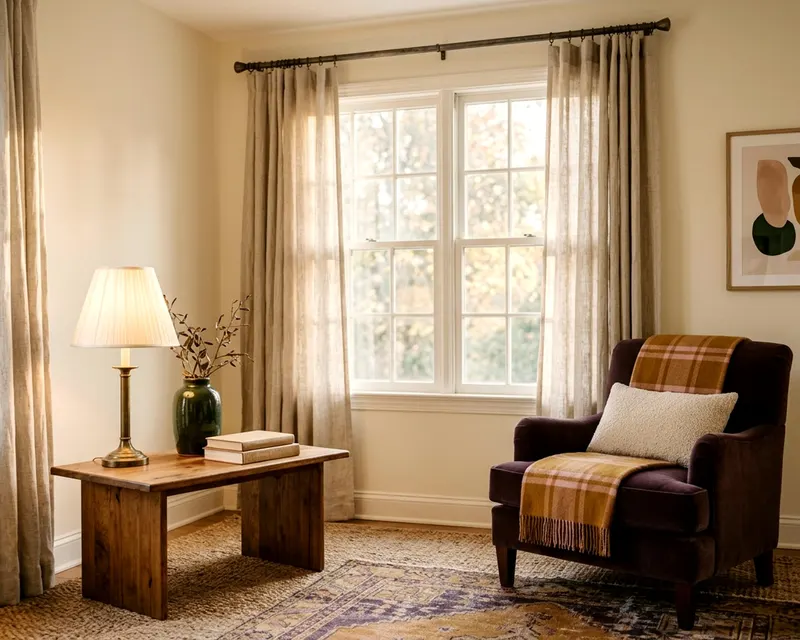
Good curtains finish a room. Finding the right curtains for living room windows means choosing fabric that handles light well and hanging the panels high and wide. Proper rod placement and generous fabric width keep the setup looking full and soft rather than flat and tight.
Determine the job the curtains will do
The function of the fabric dictates everything else. You need to know what problem the panels will solve before you look at swatches. Some living rooms demand total privacy from a busy sidewalk. Others just need a soft texture to break up a large wall.
If your front window faces the street, privacy takes priority. A material that blocks the view inside while letting daylight filter through works best. You might layer a sheer panel behind a heavier drape to get privacy and daylight together.
A room with intense afternoon sun needs protection. Harsh rays fade upholstery and heat up the space. A heavy material or a dedicated sun lining can help protect your furniture and keep the room cooler.
Sometimes the glass needs no shielding at all. If you live in a quiet area with mature trees outside, the fabric might serve only as decoration. You can choose lighter materials and focus entirely on color and drape.
Think about how often you will move the fabric. A panel that closes every night requires sturdy fabric and smooth hardware. A panel that stays pinned to the side can be made of delicate material.
Fabric weight and the way it hangs
The material controls how the curtain hangs and how much sun enters the room. Lightweight fabrics feel casual and breezy. Heavy fabrics fall in straight, formal lines and create a grounded look.
Linen offers a relaxed drape with a distinct texture. The loose weave lets sunshine filter into the room softly. It keeps the space feeling open and airy. Pure linen wrinkles easily, which adds to its casual, lived-in charm.
Cotton provides a crisp and predictable finish. It holds its shape well and works in nearly any casual space. Cotton takes dye well, making it a reliable choice for solid colors and sharp geometric patterns.
Velvet brings serious weight and rich texture. The thick pile absorbs light and can help with cold window drafts. Velvet panels look luxurious and anchor a large room effectively. They suit formal living spaces.
Wool acts much like velvet but offers a flatter, matte finish. It can help with a drafty window. Wool tailored into thick panels brings a clean, structured aesthetic to modern rooms.
Adding a lining to control light and heat
Lining changes how any fabric behaves. Unlined panels glow brightly when the sun hits them directly. This looks beautiful with linen, but it can wash out the printed pattern on a cotton drape.
A standard privacy lining protects the face fabric from sun damage. It adds structure to the pleats so they hang in neat, uniform lines. This middle layer gives a lightweight drape some necessary body.
Blackout linings block most light. They make sense if your living room doubles as a guest sleeping space. They also work well if you frequently watch movies during the daytime.
A heavy thermal lining can dampen street noise slightly. It may also help with cold air against the glass in winter and heat in summer. Adding this thick layer makes even a cheap cotton panel look substantial and expensive.
Getting the right width for full panels
Curtains require plenty of volume to look finished. Flat panels look cheap and stretched tight across the glass. The fabric should be much wider than the window.
This extra material creates deep, handsome folds when the curtains are closed. When open, those folds stack tightly together at the sides of the window. Skimping on width leaves you with a tight sheet of fabric that barely reaches the outer edges.
Always measure the width of your curtain rod, not the window frame itself. Buy panels whose combined width is well beyond that length.
If you want an extra rich look, choose an even greater total width. This creates thick, luxurious pleats that look custom made.
The heading style changes how the width behaves. A pinch pleat gathers the fabric permanently at the top. This structured style tends to give neat, uniform folds when you pull the drape shut.
A rod pocket style gathers directly on the wooden or metal pole. It looks softer but takes more effort to arrange into neat folds by hand. Ring clips offer a casual look. The clips bite into the fabric and slide easily across the metal rod, creating a relaxed fold that moves effortlessly.
Hanging the curtain rod high and wide
The placement of the rod changes the entire shape of the window. Mounting the hardware directly on the window trim shrinks the room and traps the light. You want to frame the window, not crowd it tightly.
Lift the rod closer to the ceiling. Place the brackets somewhere between the top of the window trim and the ceiling line. This high placement draws the eye upward and makes the whole room feel taller.
Extend the rod past the window frame on each side. A wider rod gives the open curtains a place to rest entirely clear of the glass. You can pull the panels completely out of the way.
This exposes the entire window and maximizes the natural daylight coming in. It also creates a clever illusion. The fabric covers the bare wall, making the window behind it seem much larger than it really is.
Sturdy hardware matters just as much as placement. Heavy fabrics like velvet require a thick metal rod and wall anchors rated for the weight, so check the hardware label. A thin rod will sag in the middle under the weight of long, lined panels.
Support a long span with a sturdy center bracket. This keeps the rod perfectly straight and the panels hanging true. A French return rod curves back into the wall at the ends. This style blocks light from escaping out the sides of the drape.
Choosing a length that hits the floor
Curtains usually look best when they reach the floor. Floating panels cut the wall in half and look poorly measured. The exact distance they fall depends on your tolerance for daily maintenance.
A kiss length gives a clean, tailored finish, with the hem just barely touching the floor. This length stays clean easily and works well for panels you open and close every day.
A break adds a slight fold near the hem. It resembles a well-tailored pair of trousers resting gently on a shoe. The fabric extends a short distance past the floor. It looks relaxed and hides uneven, sloping floors.
A puddle brings drama to a room. A generous sweep of extra fabric pools heavily on the ground. Puddled curtains require constant styling and gather floor dust quickly. They work best on decorative panels that stay completely put.
Measure the length carefully before ordering. Start from the exact spot where the rod will sit and measure straight down to the bare floor. If you plan to use curtain rings, measure from the bottom of the hanging ring.
Account for any thick rugs near the window. A thick pile rug might catch the hem of a kissing curtain. Give the fabric a small amount of clearance if it needs to swing freely over a thick wool rug.
Tying the fabric to your living room decor
The fabric color needs to make sense with the rest of the room. You can match the painted walls, contrast sharply with the main sofa, or pull a subtle shade from the rug.
Matching the panels to the wall color creates a solid, unbroken backdrop. This trick makes a small living room feel bigger because the eye travels smoothly across the space. The woven texture of the fabric provides just enough visual interest.
If you want living room curtain ideas that stand out, pick a bold contrasting color. A dark blue velvet drape pairs handsomely with a tan leather sofa. High contrast draws attention straight to the windows and frames the outside view.
Patterned curtains demand center stage in any design scheme. Pull one subtle color from the busy pattern and repeat it elsewhere in the room. A throw pillow or a ceramic vase in the exact same shade ties the look together.
You can decorate a living room by building layers of matching tones. Match your curtain fabric to the large area rug to anchor the space firmly.
Hardware color should echo the metals already in the room. Match the curtain rod to the overhead light fixtures or the wooden cabinet hardware. A brass rod pairs with a brass floor lamp. A matte black rod grounds a lighter, airy space.
You might also use an analogous color scheme in any room to pick the fabric. Choose a shade right next to your wall color on the color wheel. This keeps the room feeling calm and deliberate without resorting to pure matching.
Coordinate the fabric carefully with your living room paint colors. Cool gray walls wake up when paired with warm mustard curtains. Warm white walls look crisp next to cool green linen.