How to plan a lighting layout with three layers of light
Plan effective lighting layouts for any room using three simple layers of light. Learn to combine ambient, task, and accent fixtures for a polished home.
- Styled by Louisa Kimbrough
- 7 minute look

Good lighting layouts depend on three distinct layers of light working together in a room. Ambient light provides the overall glow, task light illuminates specific jobs, and accent light highlights your favorite features. Planning these layers before you buy fixtures helps the space look polished and work well after dark.
The three layers of light
You need three types of light to make a room function well. Ambient light is the general illumination that fills the space. Task light is the focused beam you use to read a book or chop vegetables. Accent light is the directional glow that draws the eye to a painting or a textured wall.
Many rooms feel flat because they rely on one layer. A single flush mount on the ceiling can cast harsh shadows. A room with only table lamps leaves the corners feeling heavy and dark. Good lighting design balances all three.
The ambient layer acts as a base. The task layer adds bright pools of utility. The accent layer provides depth and visual interest.
Take a typical primary bedroom. The ambient layer is the flush mount light in the center of the ceiling. The task layer comes from the two small swing-arm sconces next to the headboard for reading. The accent layer might be a small picture light over a dresser mirror.
Bedroom decor that feels calm relies on this exact balance.
Map out how you use the room
The sofa might look beautiful in broad daylight. Once the sun sets, you need to know exactly what happens in that room to light it properly. Start by making a simple list of activities.
Maybe you do crossword puzzles in the armchair by the window, fold laundry on the large ottoman, or turn the dining table into a homework station at five o'clock. Write down every activity.
These habits dictate your lighting needs from the ground up. This list shows you where to place your focused fixtures. You might want to review how to decorate a living room so you know where the furniture goes. You cannot plan the light until you know where the chairs sit.
Measure the room and measure the major pieces of furniture. A large round dining table needs a different overhead fixture than a long rectangular one.
Plan your ambient light first
The ceiling pendant is usually the starting point for ambient light. A central fixture washes the room in a broad, even glow. You want to walk through the space safely without tripping over a rug. The Department of Energy says lighting accounts for about 15% of an average home's electricity use.
You do not have to rely on the ceiling. Some older homes have no overhead fixture in the living room or bedroom. You can build this base layer entirely with table and floor lamps scattered around the edges.
A network of shaded lamps bouncing light off the walls creates a flattering base. This often looks better than a single bright overhead dome. Place your ambient sources to spread light evenly.
A large living room might need a chandelier in the center and two torchiere floor lamps in opposite corners. A hallway often suits a series of evenly spaced recessed cans. Just ensure the whole room gets a wash of base light. Light reflecting off a white ceiling scatters softly across the room.
Add task light for specific jobs
The reading chair needs its own dedicated light source. Task lighting provides a strong, focused beam exactly where your eyes need it most. You want this light to fall right on the pages of your book. It should illuminate the cutting board on your kitchen counter.
Place a floor lamp right beside the armchair. Make sure the bottom of the lampshade sits at roughly eye level when you are seated. This helps keep the bright bulb out of your direct line of sight.
A bedside table lamp is a classic task light. You want to read in bed without waking up a partner. Choose a lamp with a narrow shade to keep the light contained to your side of the mattress. Install under-cabinet light strips in the kitchen to illuminate the countertops.
A desk lamp belongs next to your computer monitor. Make sure the fixture directs light down onto your work surface rather than outward into the room. A metal dome shade is perfect for a task lamp. It helps block glare.
Place the lamp slightly behind and to the side of your shoulder. This prevents you from casting a shadow over your own work.
Use accent light to highlight details
The fireplace mantel or a large piece of art disappears in the dark without accent lighting. This third layer adds depth and shadow to the room. Accent fixtures pull the eye around the space. They give the room a finished, intentional look.
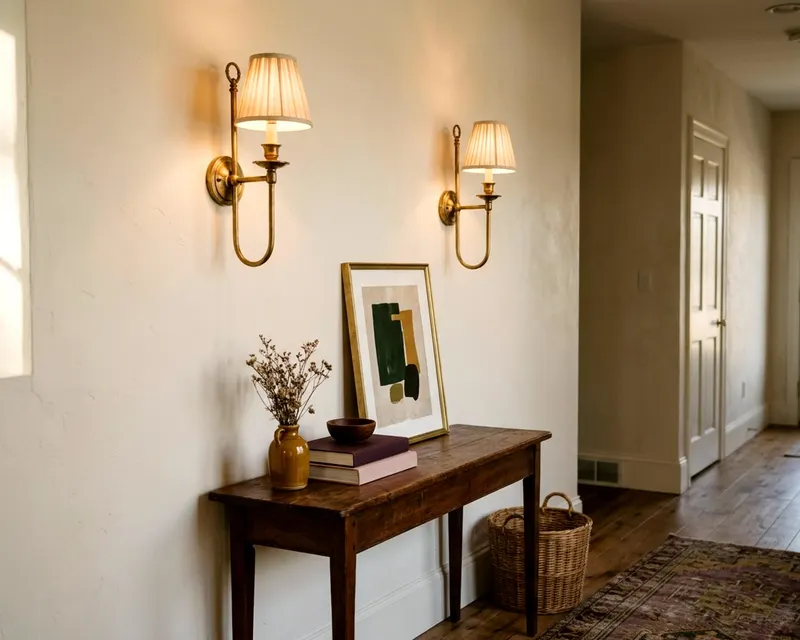
Use a brass picture light mounted above a framed canvas. Point a small floor can upward to graze a brick wall and highlight its rough texture. Bookshelves often look good with a little accent lighting. You might place a small strip of lights under each shelf to cast a warm glow over your favorite hardcovers.
Accent lighting highlights the architecture of the house. You can mount a small sconce on either side of a large window. You can place an uplight behind a large potted plant to cast interesting leaf shadows on the ceiling.
Keep the brightness of accent lights slightly lower than your ambient light. They should draw the eye without blinding you. To light a tapestry, first read ways to hang a wall tapestry, then use a directional track head to light the fabric from above.
How to choose the right bulbs
The bulb matters just as much as the fixture holding it. Bulb packages carry a label that shows how much light a bulb produces. The FTC says lumens measure brightness, so more lumens means brighter light.
You can stop looking at watts to figure out how bright a room will get. Watts measure the energy a bulb draws from the wall. Lumens measure the actual light you see.
A chart helps you match old incandescent brightness to new LEDs. ENERGY STAR lists 450 lumens to match a standard 40-watt bulb and 1,100 lumens to match a 75-watt bulb.
Standard wattage | Lumens needed |
|---|---|
40-watt bulb | 450 lumens |
75-watt bulb | 1,100 lumens |
ENERGY STAR says certified LED bulbs come in shapes for recessed cans, track lighting, table lamps and other fixtures, including dimmable versions. This means you can likely find an energy-efficient bulb for most fixtures in your layout.
You also need to pick the right color temperature. Look for a warm, soft white bulb for cozy light in a bedroom or living room. Choose a neutral white bulb for a kitchen or home office, where ENERGY STAR says that light suits work spaces.
Mixing different color temperatures in the same room looks messy. Pick one color temperature and buy all your bulbs to match.
Install dimmers to control the mood
The wall switch finishes the plan. Ambient and task fixtures are good candidates for a dimmer switch. Dimmers let you adjust the balance between your three layers of light as the evening progresses.
You can lower the bright overhead light of a kitchen island down to a soft glow for dining. You can dim the living room chandelier when you turn on a movie. The Department of Energy says most LEDs are dimmable and dimmer compatible LEDs are widely available for fixtures on dimmer switches, so check the bulb package before you pair it with a dimmer.
Hire a licensed electrician to swap out your standard wall toggles for dimmer switches. Do not try to wire a wall switch yourself unless you have the training. Plug-in dimmers are available for floor and table lamps.
You just plug the lamp into the dimmer module, and plug the module into the wall outlet. This needs no wiring and gives you quick control over a reading lamp, as long as the dimmer suits your bulb type and the lamp's rating.
Sketch a simple plan before you buy
Grid paper is a simple way to settle your lighting layout. Draw the shape of the room and mark the major furniture pieces. Then, map out your layers.
- Mark your ambient light sources with a large circle in the center of the room.
- Add small squares for the task lights near chairs, beds, and desks.
- Draw triangles for accent lights pointing at walls, shelves, or art.
- Mark an X at every wall outlet to ensure your lamps have power.
This simple map helps you spot dark corners and overlap. It also shows roughly how many lamps and fixtures you need to buy.
You do not want to plan a reading lamp in a corner with no power. Extension cords are unsightly and can create a tripping hazard. Keep this sketch handy when you shop for lighting design ideas.
Planning on paper keeps you from buying a beautiful lamp that has nowhere to go.